Article

Stop the losses: 5 hidden cost leaks in your factory

On June 20, 2026, at BITEC Bangkok, as part of Manufacturing Expo 2026, our Partner & Director Krongkarn Koonsawat took the stage at FacTech Focus to present “Stop the Losses: 5 Hidden Cost Leaks in Your Factory.”
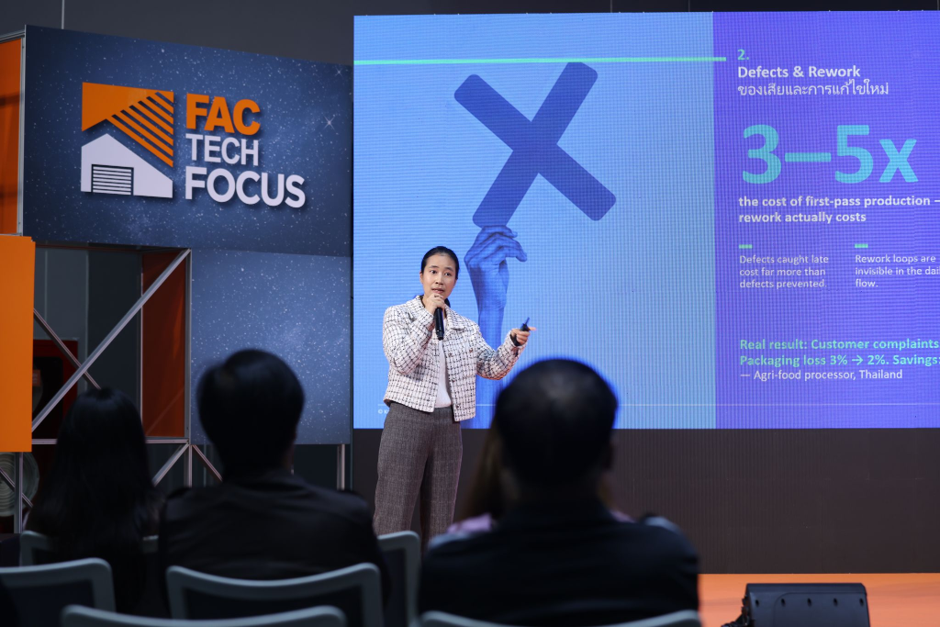
The session began with a challenge to the audience: every factory is losing money right now, often without knowing it . The question isn’t whether losses exist; it’s whether leadership knows where they are.

The pressure on Thai manufacturers

Thai manufacturers face mounting pressure on multiple fronts: intensifying competition from China and Vietnam on both cost and quality, ESG and sustainability regulations shifting from optional to mandatory, customers demanding shorter lead times at lower prices, and labour costs rising while productivity stays flat. In this environment, the factories that will thrive are the ones that stop wasting the resources they already have, rather than simply investing in more technology.
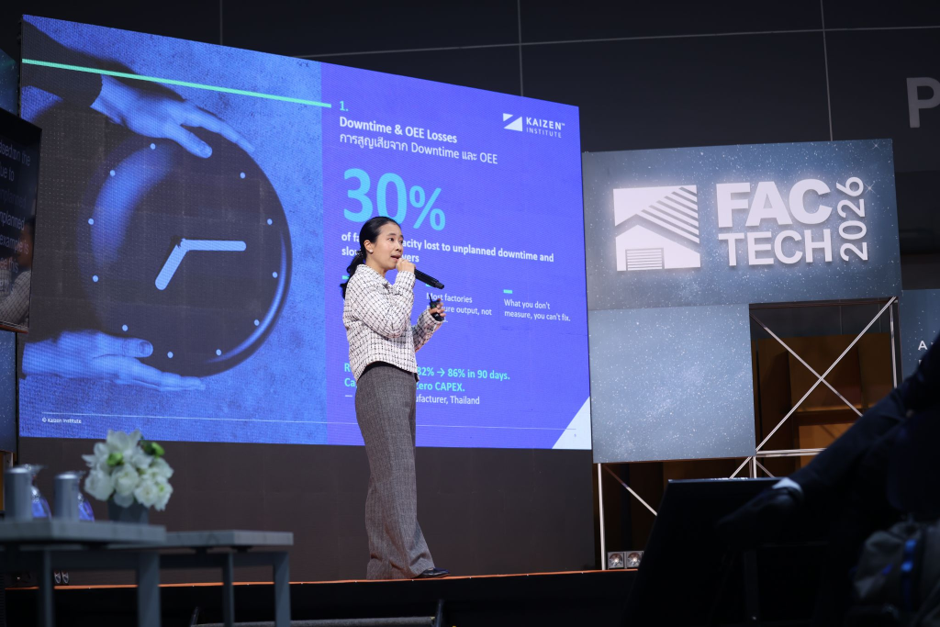
The 5 hidden cost leaks

Krongkarn walked the audience through five common sources of hidden waste that quietly erode factory performance:

  • Downtime & OEE losses: Unplanned downtime and slow changeovers eat into capacity in ways that rarely show up in reports. Most factories run well below the OEE they think they have, and the gap is usually hidden in small stops, adjustments, and waits that never get logged.
  • Defects & rework: Rework typically costs several times more than getting it right the first time and most of that cost never gets tracked, because it dissolves into the normal flow of daily operations. Every part that gets sent back consumes labour, material, and machine time that was already “spent.”
  • Overproduction & excess WIP: Producing more than needed feels like a safety net, but it ties up cash, takes up space, and hides quality problems that only surface once the stock gets used up. It’s one of the hardest wastes to spot, because at first glance it looks like productivity.
  • Excess motion & transport: In a typical factory, a significant share of operator time goes into movement – walking to get parts, tools, or information – rather than adding value to the product. It’s waste that builds up in seconds per cycle, but adds up fast across a shift, or a year.
  • Inventory & waiting: Much of the waiting time on a factory floor doesn’t come from equipment breakdowns, it comes from planning gaps: missing material, missing information, poor sync between steps. Extra stock is often used as a buffer against that problem, but it only masks it, it doesn’t fix it.

The losses hidden in “normal”

Krongkarn’s central message was simple but powerful: the biggest losses are rarely visible in reports.

They are embedded in daily operations and quietly accepted as “normal.” The factories that will succeed tomorrow are the ones that continuously challenge the status quo, eliminate waste, and build a genuine culture of continuous improvement – one where technology and people move together, not technology alone.

Technology and people, together

As she noted, no software can clean a machine, and no robot can fix a communication breakdown between teams. Sustainable results come from combining the right tools with the right mindset on the factory floor.

A sincere thank you to everyone who joined the session and contributed to such an engaging discussion on operational excellence, productivity, and the future of manufacturing in Thailand.