
Quality Assurance
Computer vision identifies defects, anomalies, and process deviations in real time, supporting more consistent quality.
Real-time visual intelligence for better quality and faster decisions
Computer vision uses AI to enable machines to interpret and act on visual information. Across manufacturing, retail, logistics, and other operational environments, it can improve quality control, automate visual tasks, and enhance customer and employee experiences.
At Kaizen Institute, we deploy computer vision as part of a broader quality and process design, not as a standalone camera project. Our teams combine operational expertise with AI
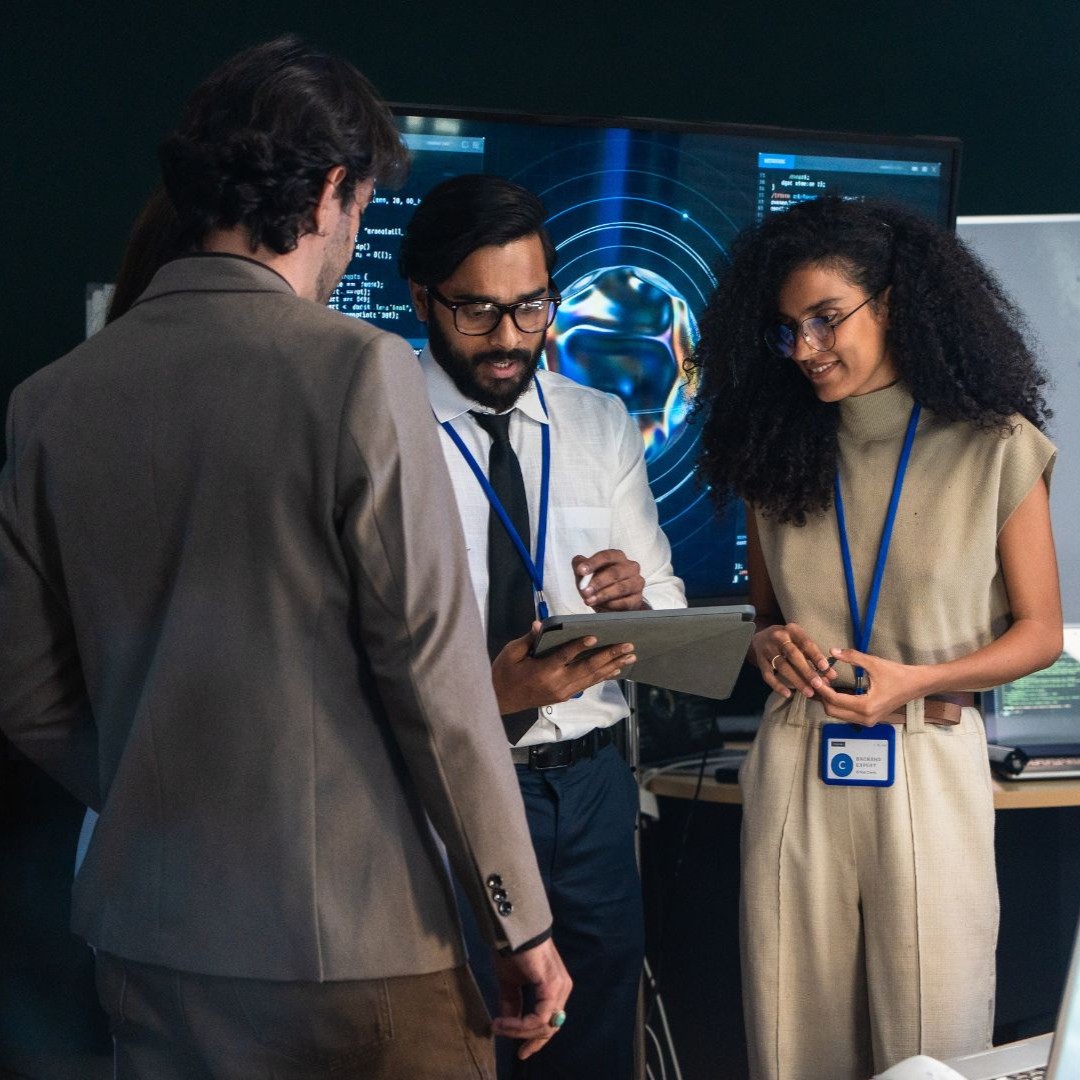
On the shop floor, computer vision supports real-time defect detection, process monitoring, and safety checks. In retail and logistics, it enables customer flow analysis, queue management, and shelf or inventory monitoring. In these contexts, it can replace or complement slow, inconsistent manual checks with continuous, automated visual monitoring.
It works best for high-volume, repetitive visual checks where consistency and speed matter, such as full inspection of every unit. Manual inspection still has a role for ambiguous or low-frequency cases. Most successful deployments combine both: automated screening plus people focused on exceptions.
A computer vision solution typically requires cameras positioned to capture the relevant view, sufficient lighting and image quality, and a labeled dataset of examples, such as defects, behaviors, or events, to train or fine-tune the model. Existing cameras and feeds can often be reused, reducing the infrastructure investment needed.
We design the use case around the process it’s meant to improve, including inspection points, line layout, and root causes of defects, rather than deploying a generic vision model, ensuring it flags the right issue at the right point and connects to the improvement actions that follow.
Computer vision delivers the clearest measurable impact in high-volume, visually intensive processes where quality, speed, or consistency can be tracked. Typical use cases include defect detection and quality control in manufacturing, inspection and sorting in logistics, and customer flow, queue, and shelf monitoring in retail. In each case, impact can be measured through indicators such as defect rates, inspection time, errors, waiting times, or process efficiency.
Models are retrained as new defect types, products, or scenarios emerge, with performance monitored against false-positive and false-negative rates. We also review the underlying process periodically, since changes on the line or in-store often require retraining what the system detects.