Training programs that build culture for lasting continuous improvement
WHAT IS OUR CONTINUOUS IMPROVEMENT TRAINING
Build the capability to identify waste and solve problems throughout the organization
Most organizations have improvement opportunities hidden within their day-to-day processes. Waste remains invisible, recurring problems consume valuable time and resources, and improvement efforts often focus on symptoms rather than root causes.
Our continuous improvement training programs equip teams with the methodologies, tools, and analytical skills needed to identify improvement opportunities, optimize processes, solve problems… systematically, and prevent risks before they impact performance. From KAIZEN™ fundamentals and value stream analysis to structured problem-solving and risk assessment, each program is delivered in-company and tailored to your operational reality.
Identify potential failure modes, assess and prioritize risk, and build mitigation plans before problems reach production or customers. Teams learn to apply FMEA and Reverse FMEA methodologies to shift from reactive quality management to structured prevention.
Conducting FMEA and Reverse FMEA analysesAssessing and prioritizing riskBuilding mitigation and prevention plans
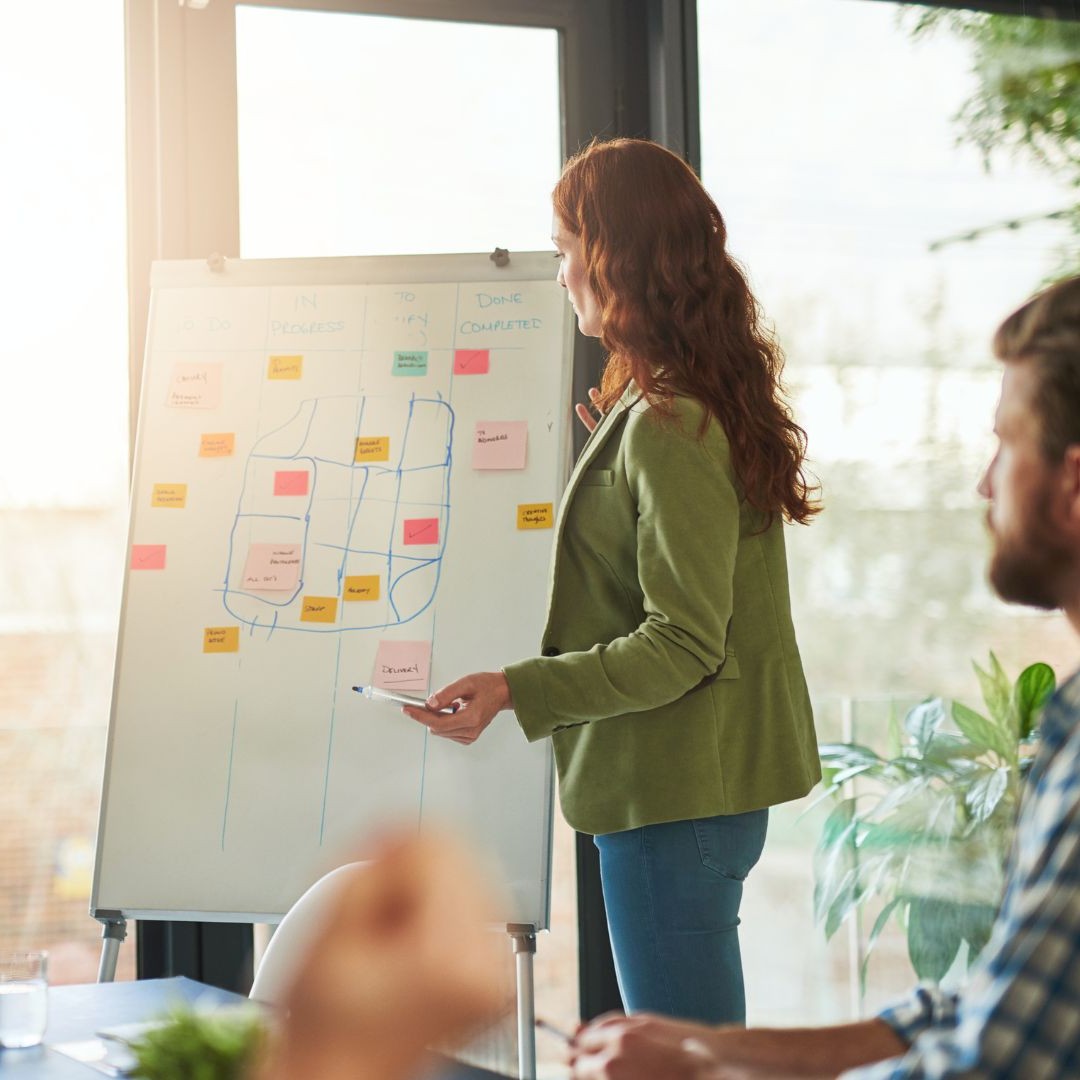
Structured Problem Solving
Apply leading problem-solving methodologies to identify root causes, design permanent solutions and prevent recurring quality and operational failures. Teams build a rigorous, consistent approach to resolving complex problems that delivers lasting results.
Applying structured problem-solving frameworksIdentifying and validating root causesStandardizing solutions to prevent recurrence
Value Stream
Map the current state of a value stream, identify the gap between current and future performance and build a structured improvement plan. Teams develop the capability to see waste, flow disconnections and systemic improvement opportunities across end-to-end processes.
Mapping current-state value streamsDesigning future-state flowsPlanning KAIZEN™ improvement projects
Lean Office
Apply lean principles to office, administrative and service processes to improve flow, reduce waste and increase productivity. Teams learn to map service processes, define standard work, optimize capacity and introduce automation to deliver more consistent and responsive operations.
Mapping and optimizing office and service processesIncreasing resource productivityOptimizing planning and workload management
KAIZEN™ Event
Plan, facilitate and close focused improvement workshops that deliver measurable results on real operational challenges. Teams learn to apply the 9-step A3 model and structured workshop dynamics to run events that engage participants and sustain outcomes.
Facilitating structured improvement eventsApplying the A3 modelSustaining event results
KAIZEN™ Foundations
Build the shared mindset, principles and tools that enable teams to start and sustain a culture of continuous improvement. Participants learn to apply the KAIZEN™ Culture Model, identify waste in daily work and use basic improvement tools across any function or level of the organization.
Extensive experience applying KAIZEN™, Lean, and Six Sigma across industries, including Fortune 500 organizations, with trainers who bring proven real-world expertise.
Holistic approach
Practical, hands-on learning with immediate workplace application, building a culture of continuous improvement across every level of your organization.
Flexible format
Flexible delivery formats designed around your organization’s schedule, locations, and operational priorities, from single sessions to multi-phase programs.
Customized programs
Every program is tailored to your organization’s industry, processes, and current challenges, ensuring relevant, practical learning rather than generic, off-the-shelf content.
Global Recognition
Train with a globally recognized institution, strengthening your organization’s continuous improvement capability and professional credibility.
Certification excellence
Certification that confirms your organization’s mastery of the KAIZEN™ methodology and signals capability to your market and stakeholders.
CERTIFICATION EXCELLENCE
KAIZEN™ Training Certification
Kaizen Institute certification recognizes the successful completion of each training program and validates the participant’s knowledge and practical capability. Depending on the program, certification involves:
Completion of the required training sessions
Successful completion of the certification exam
Completion of a practical improvement project
HOW IT WORKS
Built by experts in change that endures
Traditional Training Providers
Standalone courses that teach concepts in silos instead of building organizational capability
Theory-heavy content with limited practical, on-site application
One-size-fits-all programs that don’t adapt to the organization’s structure, processes, or priorities
KAIZEN™ Training
A structured learning pathway that develops capability progressively, from frontline teams to senior leadership
Case studies and simulations grounded in real operational contexts
Training tailored to the organization’s industry, processes, capabilities, and business priorities
faq
Frequently asked questions
The programs cover a broad range of continuous improvement methodologies, from foundational tools such as 5S, visual management, and standard work to more advanced approaches including Value Stream Analysis, KAIZEN™ events, structured problem solving, and risk analysis through FMEA. They also combine cross-functional methodologies that can be applied across the organization with specialized approaches designed for specific processes, functions, or operational challenges. This allows organizations to build improvement capabilities progressively, from simple tools to more advanced methodologies.
Continuous improvement training equips teams with the tools and methodologies needed to identify waste, improve processes, resolve problems at their root cause, and prevent risks before they impact performance. Organizations that invest in structured continuous improvement capabilities reduce recurring problems, eliminate inefficiencies, and improve quality, productivity, and operational performance.
Yes. Several programs in this cluster are directly relevant for leadership — particularly Value Stream Mapping and KAIZEN™ Events. Leaders who understand the KAIZEN™ Culture Model, can read a value stream map and know how to sponsor and close improvement events create the conditions for CI to scale. Continuous improvement that is owned and modeled by leaders sustains far more effectively than programs driven solely by specialists.
Continuous Improvement training focuses on building a culture of continuous improvement by developing the mindset, methodologies, and problem-solving capabilities needed to improve processes every day. Lean Six Sigma training shares many of the same principles and methodologies but places greater emphasis on statistical analysis and the reduction of process variation.
For most organizations, Kaizen Foundations is the recommended starting point, as it provides the understanding of how to build a continuous improvement culture and develops the common language, principles, and improvement methods that support all other programs. Organizations that already have a strong continuous improvement foundation may choose to start with a more specialized program focused on a specific challenge or capability area. Our specialists can help assess your current level of maturity, improvement priorities, and business objectives to identify the training program that will deliver the greatest impact for your organization.
Yes. The training is delivered in-company and tailored to your organization’s processes, practices, and typical challenges. The program is aligned with your organization’s reality, priorities, and team structures, enabling teams to apply the concepts and methodologies directly to their work environment.
Yes. The in-company format is designed to train teams, not individuals. Typically, each group includes up to 12 participants to maximize interaction, practical application, and coaching effectiveness. However, programs can scale across multiple groups, departments, or sites using parallel cohorts or scaling methods adapted to large organizations.